
Frequently asked questions
🛜 Ensure that there is always an internet connection.
| Fout | Oplossing |
|---|---|---|
1 |
There has been an unknown error. | Please double-check the organization name. An incorrect name may prevent login. |
2 |
This user does not exist, or the password is incorrect. | (1) Please double-check your email or password. (2) New user? → Please type in the temporary password from Mentech manually. Copying and pasting does NOT work. |
3 |
Login failed please try again. | You are trying to log in to the wrong MyHUME website. Type http://myhume.nl in the search bar for the correct website. |

✅ Yes, it is. With MyHume you can decide who sees the live stress predictions. Here is how to do it:
Open the client profile which you want to adjust. Click the settings icon in the upper left card. 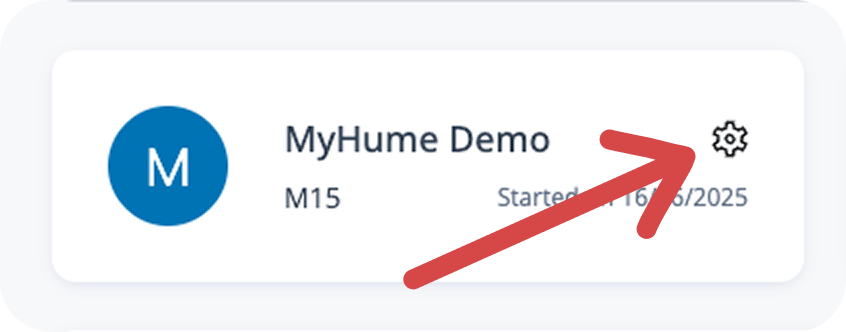 | |
In the General settings, you have the possible 3 options: | |
2.1 | Option 1: Choose “Clients and caregivers“ if you want to show the traffic light stress predictions in real time to both the group and the hub phone. In this way, everyone will be able to see them. 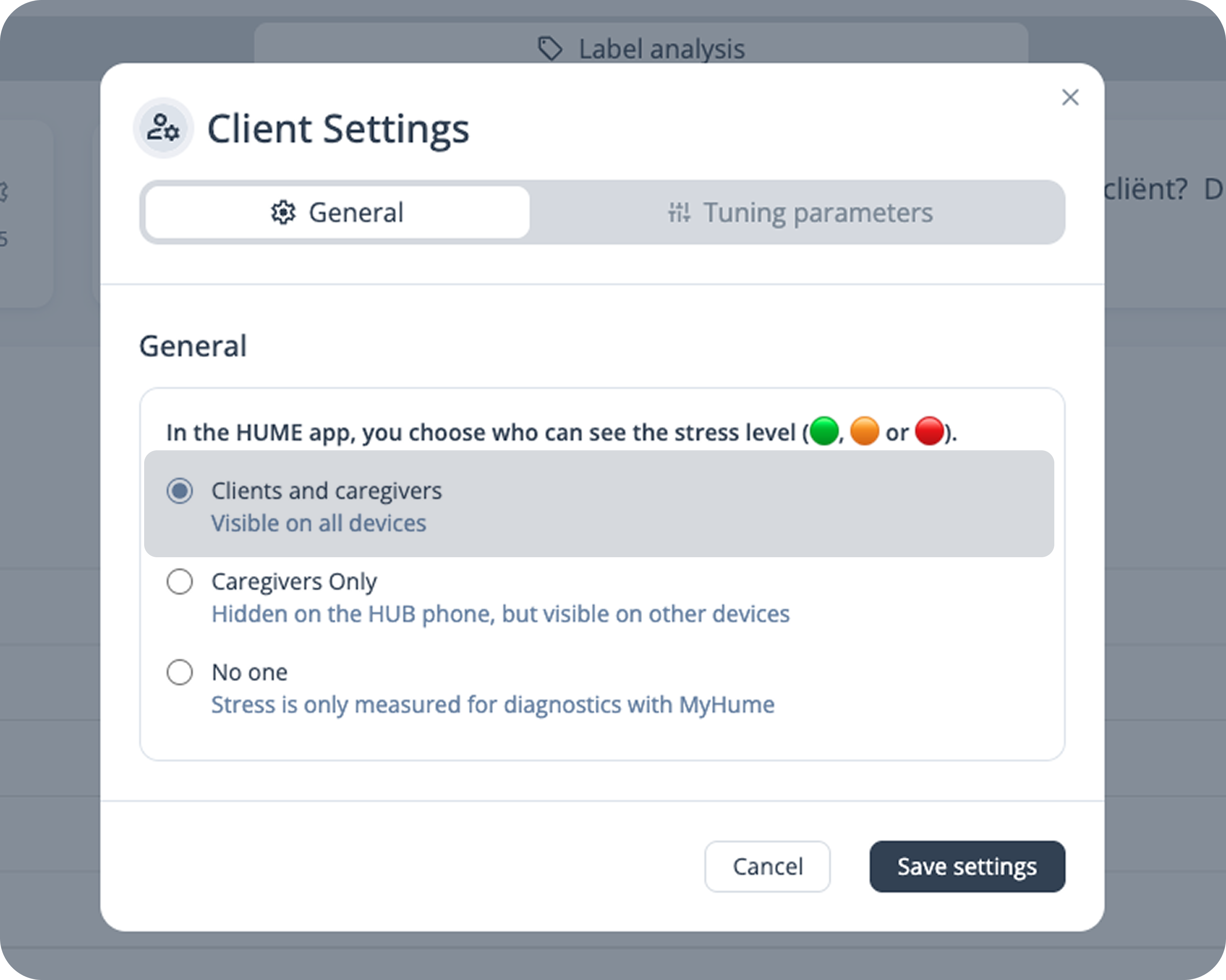 |
2.2. | Option 2: Choose “Caregivers only“ if you want to show the traffic light stress predictions in real time only to the group phone. This means that the hub phone (used to start the measurement) will not display the live stress predictions. This is preferred when you do not want your client to see his own data (stress predictions and labels). 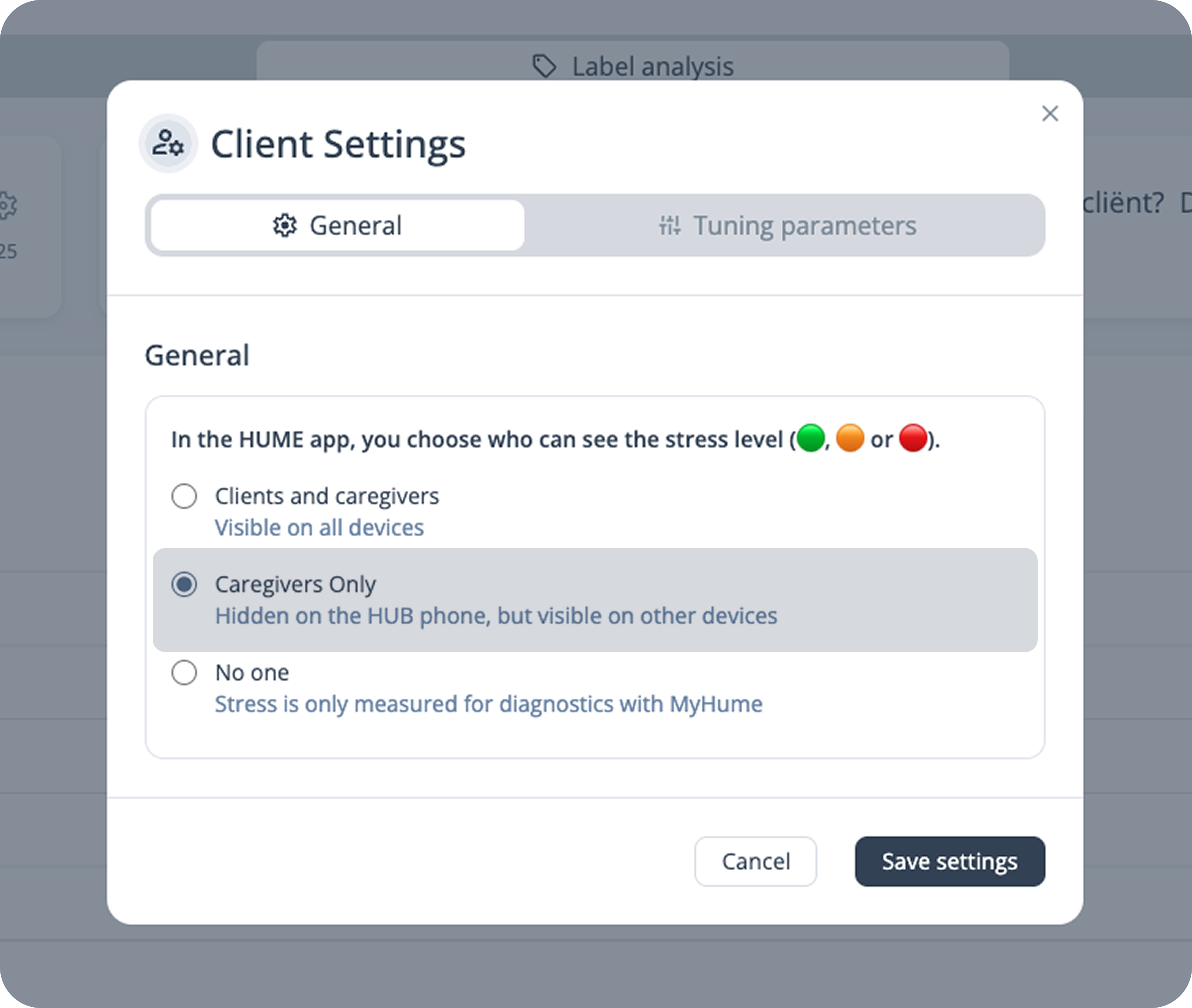 |
2.3 | Option 3: Choose “No one“ if you do not want any of the HUME app users to see the live stress predictions incl. clients and caregivers. This is preferred when you do not want the live data to influence your workflow and you collect data only for long-term diagnostics. 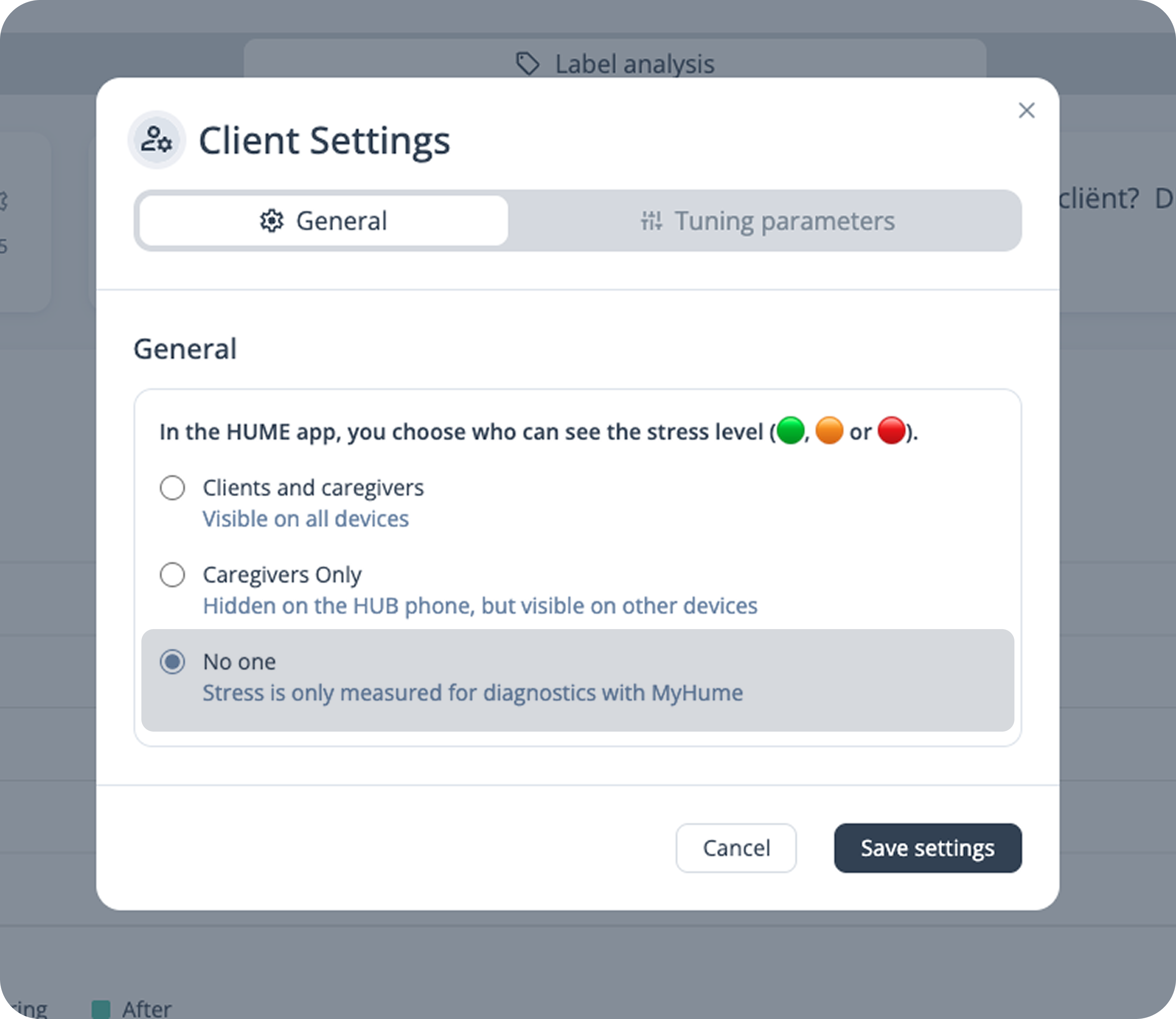 |
Click “Save settings“ to publish your changes. |

HUME doesn’t specifically measure negative stress. The stress or the physiological arousal can increase due to both positive experiences (like excitement or joy) and negative experiences (like fear or anxiety).
The system cannot distinguish between positive and negative stress based solely on these physiological measurements. For this reason it is important to carefully analyse the data and know the schedule of your client.

It’s important to note that stress isn’t always bad. It should be analysed in the context of the client’s life and day program. To assist with this, HUME offers you the feature of Labelling and Label Analysis. By creating a label (e.g. 20:00 - 20:30 “Client at the disco“), you can later see that the spike of arousal at 20:00 is caused by an activity that your client enjoys.
By combining HUME’s data with caregivers' observations, you can better understand whether the arousal is likely due to positive or negative factors.
These are just good examples that can inspire you to form a concrete research question. To make sure your question best matches your client’s goals, consult with a consultant from Mentech.
Research question | How to use MyHume to answer it? |
|---|---|
How does the client react to the current daily/weekly program? | MyHume helps you identify which periods are most stressful for your clients. Stress often arises from specific parts of their schedule. With long-term Period Analysis, you can track how a client’s day develops and compare patterns across different days. This allows you to easily analyse and contrast, for example:
Read more about how to do it here |
Which interventions work better for my client? | The easiest way to compare interventions is with Label Analysis in a few easy steps.
→ As a conclusion, you can see which intervention has a better effect on the client’s stress levels. High stress after an activity could mean the intervention is effective but intensive, or that external factors are disrupting its calming effect. MyHume helps you spot these nuances, so you can adapt programs with greater precision. Read more about Label Analysis here. |
How can I reduce the stress of my client in the mornings? | You already observe problematic behaviour from your clients in a specific part of the day (e.g. in the mornings). There are multiple approaches to this question that can help you:
|
Contact Mentech
🕑 8:30 AM – 5:00 PM
🗓️ Monday to Friday
📪 support@mentechinnovation.eu
📞 040 2094110 (also on WhatsApp)
*In the evenings, weekends, and public holidays, an on-call service is available for emergencies.